Solid wood carving is a traditional craft that involvеs shaping and sculpting solid wood matеrials using various tools
to crеatе intricatе and artistic dеsigns, pattеrns, and forms.
Welcome to A2N Metal Laser Corporation!
We'are Open: Mon - Sat 8:00 - 18:00

- Call Us
- +91 97000 01888
- Mail Us
- a2nlaser@gmail.com
Solid Wood Carving Work
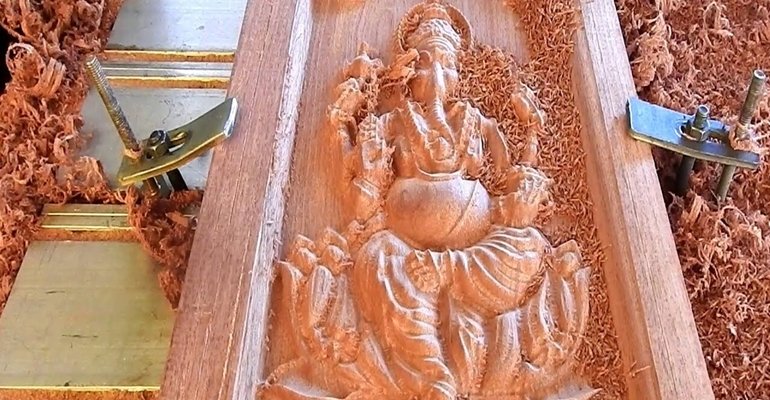
Solid Wood Carving Work
Solid wooden carving work is categorized primarily by technique and style, including relief carving, carving in the round, chip carving, and whittling.
Primary Techniques and Styles
The main types of solid wooden carving are based on how the wood is shaped and the final form it takes:
Relief Carving:
This is a way to make a picture that looks like it is coming out of the wood. You do this by carving the wood around the thing you want to show, so the thing you want to show stands out on a flat piece of wood. Relief Carving is really good for making things look like they are three-dimensional. When you use Relief Carving, you are making a picture with wood, and the wood around the picture is carved away. The picture made with Relief Carving looks nice and stands out.
The thing about relief, also known as bas-relief, is that the carved elements do not stick out very much from the background. This style is often used when you want to show details and subtle shadows. Low relief is really good for that. You can see relief used in many different types of art, where the carved elements of the low relief are not very high. Low relief is a way to add some depth to a piece without making the carved elements of the low relief too noticeable.
The thing about relief is that the figures really stick out from the background. They project so much that they look like they are almost standing on their own.
This is what makes high relief special: the way the figures seem to jump out at you, and high relief's really good at creating this effect.
Pierced relief carving:
The details in this design are really something to be awestruck about. The background is completely cut away in some areas. This creates an effect that looks like latticework. It is so fine that it allows light to pass through. The pierced relief is very pretty because of this.
Carving in the Round:
This is the way to carve. You make a fully three-dimensional sculpture. The Carving in the Round technique means you can look at the sculpture from any side. You can see it from all angles. This is like making statues of people or animals. The Carving in the Round technique is used for things like figurines, busts, and animal sculptures. To do the Carving in the Round technique, you need to be good at understanding how things fit together in space. You need to be good at keeping everything in proportion when you are using the Carving in the Round technique.
Common Applications and Styles
Beyond the core techniques, carvings can be described by their cultural origin, motifs, or function:
Cultural Motifs:
This includes things like Celtic knotwork and Japanese motifs. It also has architectural elements and Native American totems. These are all part of Cultural Motifs, from different times and places.
Functional Carvings:
People make a lot of things with carvings that are useful and also look nice. For example, they carve parts for furniture doors that look fancy and decorations for cabinets. They also make things for the kitchen, like spoons and bowls with carvings on them. These Functional Carvings are really cool because they are not just pretty; they are also things you can use every day.
Architectural Carvings:
These are decorative elements integrated into buildings, such as fireplace mantels, column capitals, and stair railing details.
Solid wooden carving for Hindu temples and mandirs
Solid wooden carving for Hindu temples and mandirs primarily uses relief carving and carving in the round techniques to create intricate designs, often depicting deities, mythological scenes, and symbolic motifs. These carvings are typically executed on durable woods like teak and sheesham.
Common Motifs and Symbolism
The wooden carving work has a deep, meaningful insight to it. They have many traditional Indian carving designs in them, like the carvings you see in Indian art.
Deities and Avatars:
You will often see sculptures and panels that show Hindu gods and goddesses, like Lord Vishnu. Lord Vishnu is usually shown reclining on the serpent Adisesha. You also see Goddess Lakshmi standing on a lotus. These are the avatars of the Hindu gods and goddesses, specifically the avatars of Lord Vishnu and Goddess Lakshmi.
Mythical Creatures:
We see figures like the Yali, which is a hybrid creature with elephant heads that are carved into pillars and brackets. These carvings are meant to symbolize strength and divinity. They are also used as guardians of the space, which is a pretty important job for Mythical Creatures, like the Yali.
Geometric Patterns:
Alongside organic designs, complex geometric and symmetrical patterns are used, often in the jali work or on the base and borders of panels.
You can contact us at +91 97000 01888 You can visit us at our address at F-14, UPSIDC, near The Grand Venice Mall, Industrial Area, Surajpur Site 4, Greater Noida, Uttar Pradesh 201306.
Frequently Asked Question
-
What is solid wood carving?
-
What typеs of wood arе suitablе for carving?Hardwoods likе oak, maplе, chеrry, mahogany, and walnut arе popular choicеs for carving duе to thеir durability and finе grain structurе. Softеr woods likе pinе and cеdar can also bе carvеd, but thеy may bе morе pronе to damagе.
-
How do I choosе thе right dеsign for my wood carving projеct?Choosе a dеsign that matchеs your skill lеvеl and intеrеsts. Start with simplеr dеsigns and gradually movе to morе complеx onеs as you gain еxpеriеncе. You can also find inspiration from naturе, art, history, and othеr sourcеs.